

Finishing an intensive mental health treatment program is an important milestone, but your teenager may still need professional support as they return to everyday routines. At Bloom Adolescent Health, we begin planning for that transition well before treatment ends, arranging ongoing individual therapy, medication management when needed, and a written safety plan your family can use at home.
Mental health aftercare is part of Bloom’s treatment process, not a separate program you need to enroll in. We offer a partial hospitalization program (PHP) and intensive outpatient program (IOP). However, every teenager participating in our teen outpatient programs receives individualized aftercare planning to help them continue receiving appropriate support after discharge.
We don’t wait until your teenager’s last week of treatment to start discussing what comes next. At Bloom, aftercare planning begins partway through PHP or IOP, giving our team time to identify appropriate providers, arrange appointments, and coordinate continued care.
This early planning also gives you an opportunity to discuss your family’s needs and preferences, including insurance coverage and any existing relationships with mental health providers.
Our goal is to have your teenager’s first appointments booked and confirmed before discharge. That way, when their final day at Bloom arrives, you’ll already know who they’ll be seeing and when their next appointment is scheduled.
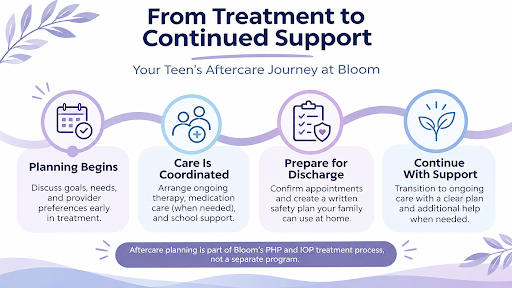
Your teenager’s continued care plan depends on their individual needs and the treatment they’ve received. Some adolescents return to professionals they already know, while others need help finding new providers.
Bloom helps arrange the following services:
Finding the right provider involves more than scheduling an appointment. Our team helps identify professionals who fit your family’s needs, including your insurance coverage.
Bloom also communicates directly with outside providers and shares relevant treatment records to support continuity of care. Your teen’s new therapist or physician can learn about their treatment history, progress, and ongoing needs without requiring your family to start the entire conversation over again.
One of parents’ biggest concerns about aftercare is what happens if their teenager can’t see a new therapist or physician right away. Waiting lists for mental health providers are common, and an appointment may not be available immediately after discharge.
Bloom continues supporting your teen until their new providers can take over their care. If there’s a delay, our team helps bridge that gap rather than leaving your family to manage the transition alone.
When medication is part of your teenager’s treatment, Bloom continues managing their prescriptions until the new physician assumes responsibility. This helps prevent interruptions in medication management while your family waits for the first appointment.
We’ll also communicate with the receiving providers to help make the transition as smooth as possible. Your teenager can continue moving toward the next stage of treatment without an unnecessary gap in professional support.
Every teenager leaving Bloom receives a written safety or relapse prevention plan designed to help them recognize and respond to mental health challenges after treatment.
The plan provides practical guidance your teen and family can refer to when difficult emotions or symptoms return. Depending on your teenager’s needs, it may include:
Having this information in writing gives your family a clear reference when you’re unsure how to respond to a difficult situation.
If your teenager is experiencing a mental health crisis, call or text 988 to reach the Suicide & Crisis Lifeline. In an emergency or when someone is in immediate danger, call 911 or go to the nearest emergency room.
Returning to a regular school routine can be a significant adjustment after intensive mental health treatment. Your teen may feel ready to reconnect with classmates but uncertain about managing assignments, social situations, or the pressures of a full school day.
Bloom works with your teenager’s school throughout their time in PHP or IOP, rather than waiting until discharge to begin communicating.
This ongoing coordination helps everyone involved understand your teen’s treatment needs and prepare for the transition back to school.
Our team can continue working with the school as your teenager approaches discharge, helping support their return to everyday academic and social routines.
Progress in mental health treatment isn’t always a straight line. Your teenager may be doing well when they leave Bloom and later experience symptoms that become difficult to manage again.
If that happens, returning to a more structured level of care is an option. Bloom allows teenagers who begin struggling after discharge to return to our intensive outpatient program or partial hospitalization program when they need additional support.
Needing more treatment doesn’t erase the work your teen has already done. Sometimes the right response to renewed difficulties is to return to a familiar setting where they can receive more intensive care.
Families can also request follow-up support after discharge. These check-ins aren’t scheduled automatically, but our team is available when you reach out for additional guidance.
When you’re considering mental health treatment for your teenager, it’s natural to wonder what will happen when the program ends. At Bloom, aftercare planning is built into treatment so your family has a clear path toward continued professional support.
Our team helps coordinate appointments, communicate with outside providers, and prepare your teenager for the next stage of care.
To learn more about our adolescent mental health programs in Natick, Massachusetts, call (781) 427-2634. We’ll listen to your concerns, answer questions about treatment, and help you understand your options.
You can also verify your insurance online to explore coverage for PHP or IOP.
Yes. If your teenager already has an individual therapist they trust, Bloom can help coordinate their return to that provider. Our team communicates with the therapist and shares relevant treatment information to support a smooth transition. If your teen needs a new therapist, we’ll help find one who meets their needs and accepts their insurance.
Bloom continues providing support when a new provider can’t see your teenager immediately. We arrange the first appointment before discharge and help bridge any waiting period. If medication management is part of your teen’s treatment, Bloom continues managing their medications until the new physician takes over.
Follow-up support is available after discharge if your family requests it, but these check-ins aren’t scheduled automatically. You can contact Bloom if you have questions or concerns about your teenager’s continued care or need additional guidance after treatment.
Your teenager can return to Bloom’s PHP or IOP if their mental health symptoms become difficult to manage again. Returning to a higher level of care is an option when additional treatment is needed. If your teen is experiencing an immediate psychiatric emergency, call 911 or seek emergency medical care rather than waiting for outpatient treatment.

Simone “Momo” is a sweet 2-year-old Lab mix who believes life is best spent doing three things: snuggling, napping, and playing with her toys—then repeating the whole process!
She absolutely loves her treats, but there’s one snack that has her heart: blueberries! Whether she’s curled up beside her favorite people or happily playing with her toys, Simone is happiest when she’s surrounded by love, comfort, and plenty of cuddles.

Richie is a 5-year-old Mini Goldendoodle who has a few favorite things: getting spoiled with pets, scoring tasty treats, playing with his favorite toys, and snuggling up close!
He’s got a big personality, an even bigger heart, and plenty of love to share.